
How Long Does It Take to Fall in Love?
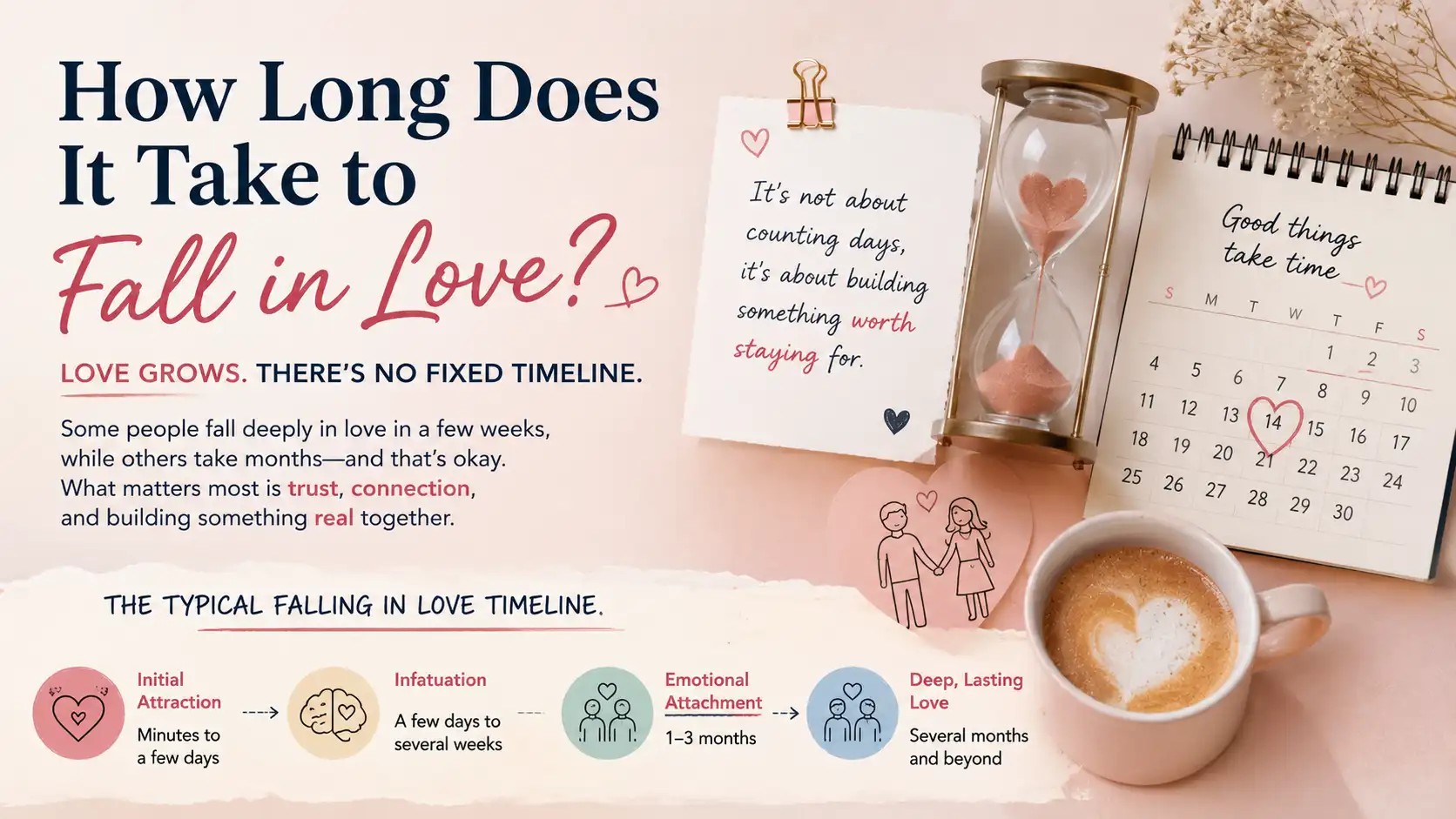
Falling in love doesn’t follow a fixed timeline. While initial attraction can happen within minutes or days, real love usually develops over several weeks or months as trust, emotional connection, and intimacy grow. Psychology suggests that healthy love isn’t measured by time alone it’s built through shared experiences, consistent effort, and emotional security.
Some people feel deeply connected after a few weeks, while others need several months before they’re ready to call it love. Neither timeline is right or wrong. What matters most is whether your relationship is based on mutual respect, honest communication, and genuine compatibility, rather than excitement alone.
Research and relationship experts suggest that many people begin developing deeper romantic feelings within one to three months of dating. However, infatuation often appears much earlier, while lasting love takes longer because it grows through trust, vulnerability, and shared experiences.
Typical Falling in Love Timeline
| Stage | Average Timeline |
| Initial Attraction | Minutes to a few days |
| Infatuation | A few days to several weeks |
| Emotional Attachment | 1–3 months |
| Deep, Lasting Love | Several months and beyond |
Instead of counting days or dates, pay attention to how your relationship develops. Healthy love grows naturally as both partners learn to trust each other, communicate openly, and support one another through everyday life.
Every relationship is different, but most people experience similar emotional stages before falling deeply in love. Understanding these stages can help you recognize the difference between physical attraction, infatuation, and long-term emotional attachment.
Initial Attraction
The first stage often happens quickly. You notice someone’s appearance, personality, confidence, humor, or the way they make you feel. During this stage, your brain releases chemicals such as dopamine and norepinephrine, creating excitement, curiosity, and the desire to know the other person better.
It’s common to think about them frequently, look forward to seeing them, and enjoy every conversation. However, attraction alone isn’t the same as love. At this point, you’re still getting to know who they really are.
Infatuation
As you spend more time together, attraction can grow into infatuation. This stage is exciting because everything feels new. You may constantly check your phone, replay conversations, and imagine a future together after only a short time.
Although these feelings are genuine, they’re often based on idealization rather than reality. You usually see the person’s best qualities while overlooking flaws or incompatibilities. That’s why psychologists consider infatuation a normal part of many relationships—but not proof of lasting love.
The next stage is where relationships begin to move beyond excitement and develop into genuine emotional connection.
Emotional Attachment Begins
This is the stage where real love starts to develop. The excitement is still there, but it’s no longer the only reason you enjoy being together. Instead, your relationship becomes stronger because of trust, emotional intimacy, honest communication, and shared experiences.
You begin to feel comfortable being yourself without pretending to be perfect. Both of you learn how to handle disagreements, support each other’s goals, and solve problems as a team. This emotional security is one of the biggest differences between lasting love and temporary attraction.
Instead of asking, “How can I impress them?” you naturally start thinking, “How can we build a healthy relationship together?” That’s a strong sign your connection is becoming deeper.
Signs Emotional Attachment Is Growing
- You trust each other with personal thoughts and feelings.
- You feel emotionally safe together.
- You support each other during difficult times.
- Conflicts are solved through respectful communication.
- You enjoy everyday moments, not just exciting dates.
- You naturally include each other in future plans.
These behaviors show that your relationship is moving beyond infatuation and toward genuine emotional connection.
Deep and Lasting Love
Long-term love isn’t something that suddenly appears after a certain number of weeks or months. Instead, it develops gradually through commitment, consistency, respect, and emotional support. While the intense butterflies may become less frequent, they’re replaced by something more meaningful: a sense of stability and trust.
People in healthy relationships don’t stay together because every day feels exciting. They stay because they genuinely care about each other’s happiness, communicate honestly, and continue choosing one another even during stressful periods. This is why psychologists often describe love as both a feeling and a daily choice.
Deep love also allows both partners to grow as individuals. You respect each other’s independence, celebrate achievements, and work through challenges together rather than seeing them as reasons to leave.
Although many people search for a specific timeline, several factors influence how quickly someone falls in love. These factors explain why one couple may develop deep feelings within a few months while another takes much longer.
Attachment Style
Your attachment style plays a major role in how you build emotional connections. Someone with a secure attachment style often trusts more easily, while people with anxious or avoidant attachment styles may need more time to feel emotionally safe.
Time Spent Together
The more quality time you spend together, the faster you understand each other’s values, personality, and communication style. Regular interaction helps build trust and emotional intimacy, which are essential for lasting love.
Emotional Availability
Someone who is emotionally available is generally more open to building a healthy relationship. On the other hand, a person recovering from heartbreak or dealing with personal challenges may naturally need more time before developing deep romantic feelings.
Previous Relationship Experiences
Past relationships can shape how quickly people trust again. Someone who has experienced betrayal or heartbreak may move more slowly, while someone with positive relationship experiences may feel comfortable opening up sooner.
Mutual Feelings and Compatibility
Love grows faster when both people share similar values, communicate honestly, and want the same type of relationship. Mutual effort creates a stronger emotional bond than one-sided attraction ever can.
Many people worry that their feelings are moving too quickly or wonder whether they’re experiencing real love or temporary infatuation. If you’re becoming confident about your feelings, you may also want to learn how to tell someone you love them without putting pressure on the relationship. Instead of focusing on how many weeks you’ve known someone, pay attention to how your emotions and behavior change over time.
You don’t need to experience every sign below, but if several of them consistently describe your relationship, there’s a good chance you’re developing genuine romantic feelings.
You Care About Their Happiness
One of the clearest signs you’re falling in love is caring about their well-being as much as your own. You celebrate their achievements, support them during difficult moments, and genuinely want them to succeed without expecting anything in return.
You Feel Emotionally Safe Around Them
Real love creates emotional security. You don’t feel like you have to hide your personality or constantly impress them. Instead, you’re comfortable sharing your thoughts, fears, and dreams because you trust they’ll listen without judgment.
You Think About the Future Together
When you’re falling in love, future plans start to feel natural. Whether it’s planning a trip, attending an event together, or simply imagining life a few months from now, you begin seeing them as part of your future rather than just your present.
You Accept Their Imperfections
Infatuation often focuses only on someone’s best qualities. Love is different because you recognize their flaws but still choose to respect, support, and care about them. Accepting imperfections is a strong sign of emotional maturity and lasting attachment.
You Communicate Openly
Healthy relationships are built on honest communication. If you can discuss disagreements respectfully, express your feelings openly, and solve problems together, your connection is likely growing into something deeper than attraction alone.
They Bring Out the Best in You
Another sign of genuine love is personal growth. A healthy partner encourages your confidence, supports your goals, and inspires you to become a better version of yourself without trying to control who you are.
Remember: Love isn’t measured by how intense your feelings are during the first few weeks. It’s measured by the consistency, trust, respect, and emotional connection that continue to grow over time.
Yes, it’s possible to develop strong feelings very quickly, but falling in love fast doesn’t automatically mean the relationship is unhealthy. Some couples form a genuine connection within a short time, while others need months before they feel emotionally secure.
The important question isn’t “How fast did we fall in love?” It’s “Are we building our relationship on trust, respect, and honest communication?”
If your relationship feels rushed, take a moment to slow down and evaluate how well you truly know each other. Healthy love gives both partners enough space to build trust naturally instead of forcing major commitments before the relationship has had time to grow.
It’s also helpful to distinguish fast emotional connection from love bombing. Love bombing involves overwhelming affection, constant attention, expensive gifts, or pressure to commit very early in the relationship. Genuine love, on the other hand, respects boundaries and develops through consistent actions rather than intense promises. If you’re unsure about the difference, read our guide on Love Bombing and Manipulation.
One of the biggest reasons people search “how long does it take to fall in love” is because they’re trying to understand whether they’re experiencing real love or infatuation.
| Love | Infatuation |
| Grows gradually through trust and shared experiences | Develops quickly and is driven by excitement |
| Accepts imperfections | Idealizes the other person |
| Feels emotionally secure | Often creates anxiety and uncertainty |
| Builds long-term commitment | Focuses on intense emotions in the moment |
| Strengthens through communication and respect | Relies mostly on physical attraction or fantasy |
Infatuation isn’t necessarily bad it’s often the beginning of many healthy relationships. However, lasting love continues to grow even after the excitement of the early stages begins to settle. That’s what creates a strong, stable, and meaningful relationship.
Psychology shows that falling in love is both an emotional and biological process. It’s not something that happens overnight, and it isn’t controlled by a single moment or emotion. Instead, love develops as your brain, emotions, and experiences work together to build a lasting connection.
During the early stages of a relationship, your brain releases chemicals such as dopamine, oxytocin, and serotonin. Dopamine creates excitement and anticipation, making you look forward to seeing the other person. Oxytocin, often called the “bonding hormone,” strengthens feelings of trust, closeness, and emotional attachment, while serotonin can influence the way you constantly think about someone.
However, psychology also suggests that these chemicals alone don’t create lasting love. Long-term relationships depend on communication, trust, commitment, emotional intimacy, and shared values. That’s why some couples who experience an intense spark don’t stay together, while others build a deep connection gradually over time.
Research also shows that every person develops feelings differently. Factors such as attachment style, life experiences, emotional maturity, and relationship goals all influence how quickly someone falls in love. There’s no “normal” timeline that applies to everyone.
Many beliefs about love come from movies, social media, or romantic stories rather than real relationship psychology. Let’s separate fact from fiction.
Myth 1: Love Happens Instantly
You can feel strong attraction immediately, but genuine love usually takes time. Trust, emotional safety, and commitment can’t be built during a single conversation or first date.
Myth 2: Falling in Love Should Feel the Same for Everyone
Every relationship develops differently. Some couples build a strong emotional connection within a few months, while others need much longer. Different timelines don’t mean one relationship is healthier than another.
Myth 3: If You Really Love Someone, You’ll Never Doubt Your Feelings
It’s completely normal to question your emotions, especially during the early stages of dating. Healthy relationships grow through honest communication and shared experiences, not constant certainty.
Myth 4: Fast Love Always Means True Love
A relationship that moves quickly isn’t automatically stronger. Sometimes fast-moving relationships become long-lasting, while others are driven by temporary excitement or infatuation. The quality of the relationship matters far more than the speed.
If you’re still waiting for a meaningful relationship, it’s worth remembering that there’s no universal timeline for finding love. You can learn more about whether you’ll ever find love and what may influence your relationship journey.
How long does it take to fall in love?
There isn’t a fixed timeline. Many people develop deeper romantic feelings within one to three months, while others need longer. Real love grows through trust, emotional connection, communication, and shared experiences, not simply the passage of time.
Is it normal to fall in love within a few weeks?
Yes, it’s possible to develop strong feelings within a few weeks. However, those feelings may still be initial attraction or infatuation rather than deep, lasting love. As the relationship develops, you’ll gain a clearer understanding of your emotional connection.
What’s the difference between falling in love and infatuation?
Infatuation is usually based on excitement, idealization, and physical attraction. Falling in love involves emotional intimacy, trust, respect, commitment, and accepting each other’s imperfections. While infatuation can happen quickly, lasting love develops over time.
Can you fall in love at first sight?
People can experience immediate attraction or a powerful emotional connection at first sight, but psychology doesn’t consider this complete love. Genuine love requires getting to know someone, building trust, and sharing meaningful experiences.
Does spending more time together make you fall in love faster?
Spending quality time together can strengthen emotional bonds because it allows trust and understanding to grow. However, time alone doesn’t guarantee love. Healthy communication, compatibility, and mutual respect are equally important.
Can love grow after friendship?
Yes. Many strong relationships begin as friendships because both people already trust and understand each other. As emotional closeness increases, friendship can naturally develop into romantic love.