
How to Love Yourself (A Real, Practical Guide)
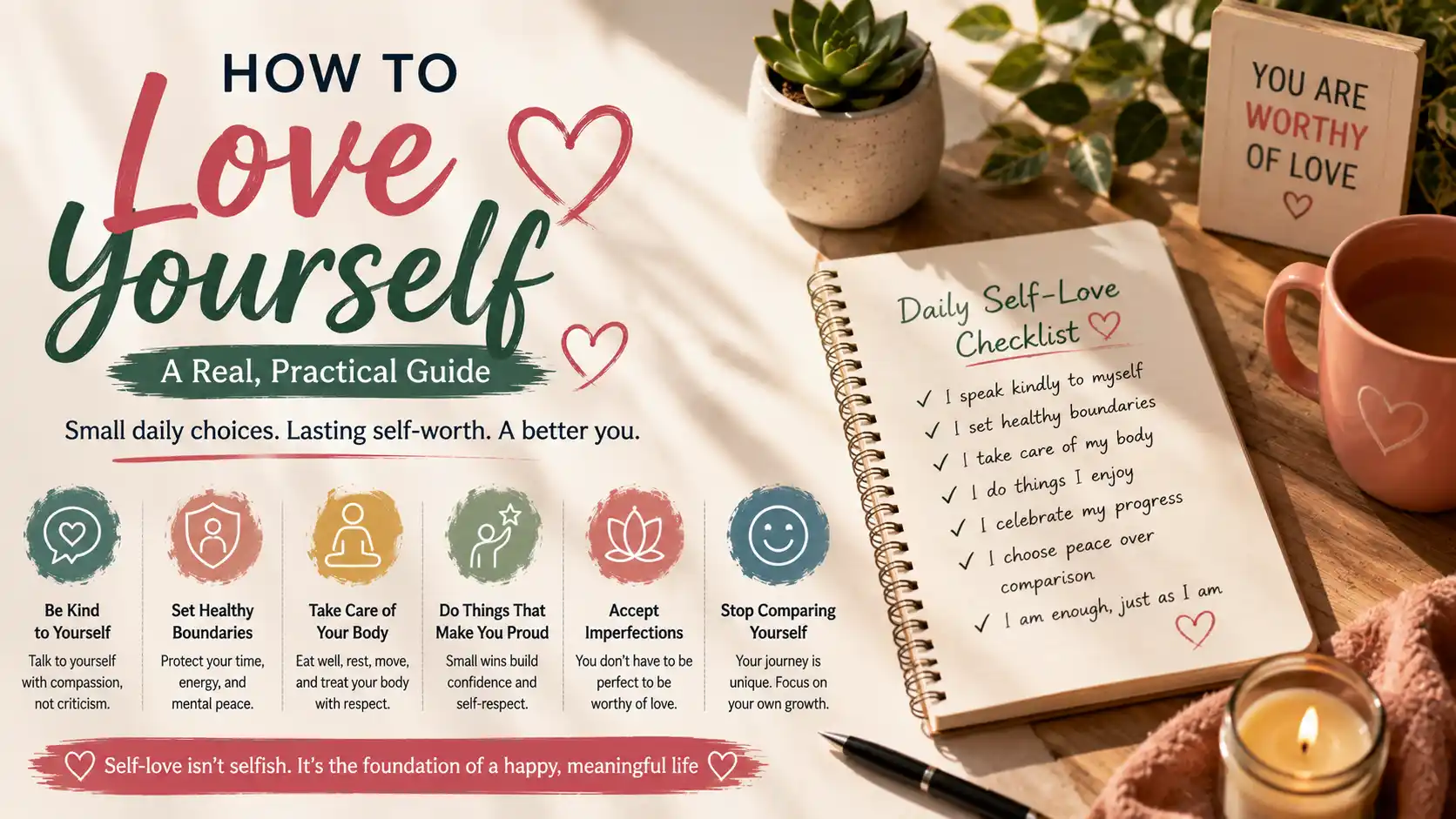
If you’re searching how to love yourself, you’re probably not looking for empty quotes or positive affirmations. You want practical advice that actually helps.
The truth is, self-love isn’t something you suddenly feel, it’s something you practice. It grows through small daily choices like speaking kindly to yourself, setting healthy boundaries, and treating yourself with the same respect you show other people.
Whether you’re struggling with low self-esteem, recovering from heartbreak, or simply wondering how you love yourself, this guide will help you build genuine self-worth one step at a time.
Many people think self-love means feeling confident every day. It doesn’t. Even people with healthy self-esteem have bad days and moments of self-doubt.
Real self-love means respecting yourself, accepting your imperfections, and making choices that support your mental and emotional well-being. It’s about believing you deserve kindness even when you make mistakes.
For example, imagine a close friend fails at something important. You probably wouldn’t call them a failure. You’d encourage them to learn and move forward. Self-love means offering yourself that same compassion instead of constant self-criticism.
Your worth isn’t determined by your job, appearance, relationship status, or achievements. Those things may change throughout life, but your value as a person doesn’t.
Self-love isn’t believing you’re perfect. It’s believing you’re worthy of care, respect, and happiness despite your imperfections.
If you’ve ever wondered “Why can’t I love myself?”, you’re not alone. Most people weren’t taught how to build a healthy relationship with themselves.
Past criticism, painful relationships, rejection, or constant comparison can slowly damage your self-worth. Over time, negative self-talk becomes a habit, making it difficult to recognize your strengths.
Social media can make this even harder. Seeing everyone else’s highlight reel often leads to unfair comparisons, even though you’re comparing their best moments with your everyday life. The good news is that self-love is a skill, not a personality trait. Like any skill, it can be learned and strengthened with practice.
Learning how to love yourself doesn’t happen because you wake up one day feeling confident. It happens through small habits that slowly change the way you think about yourself. Instead of chasing perfection, focus on making choices that build self-respect, emotional well-being, and self-worth over time.
Notice Your Self-Talk
The way you speak to yourself has a powerful impact on your confidence. Many people criticize themselves far more harshly than they would ever criticize someone they care about.
The next time you catch yourself thinking, “I’m not good enough” or “I always mess things up,” pause for a moment. Ask yourself, “Would I say this to a close friend?” If the answer is no, try replacing the thought with something more balanced and realistic.
Changing negative self-talk doesn’t mean pretending everything is perfect. It means learning to speak to yourself with honesty and compassion instead of constant judgment.
Set Healthy Boundaries Without Feeling Guilty
One of the biggest signs of self-love is knowing that it’s okay to protect your time, energy, and mental health.
If you constantly say “yes” because you’re afraid of disappointing people, you may end up feeling exhausted and resentful. Healthy boundaries don’t push people away—they create healthier relationships by making your needs clear.
Start with small changes. It’s okay to decline plans when you need rest, speak up when something makes you uncomfortable, or ask for the respect you give to others.
Remember, saying “no” to something that drains you is often saying “yes” to your own well-being.
Take Care of Your Body Because You Value It
Looking after yourself shouldn’t be about punishing your body or trying to meet impossible standards. Real self-care comes from believing your body deserves kindness and respect.
That might mean getting enough sleep, eating nourishing meals, exercising because it makes you feel stronger, or simply taking a break when you’re mentally exhausted.
When you care for your physical health from a place of respect instead of self-criticism, you’re strengthening both your body and your emotional well-being. Small, consistent habits almost always have a bigger impact than chasing quick transformations.
Remember: Self-love isn’t about becoming perfect. It’s about making daily choices that remind you your health, happiness, and peace of mind matter too.
Self-love isn’t just about feeling good it’s also about doing things that help you respect yourself. Confidence grows when your actions match your values.
You don’t need to achieve something extraordinary. Finishing a task you’ve been avoiding, learning a new skill, keeping a promise to yourself, or helping someone can all strengthen your self-confidence. These small wins remind you that you’re capable of growing, even if progress feels slow.
Instead of asking, “What will make me happy today?” try asking, “What will make me proud of myself tomorrow?” That simple shift often leads to healthier decisions.
Accept That Imperfection Is Part of Being Human
Many people believe they’ll finally love themselves once they become smarter, more successful, or more attractive. Unfortunately, that day rarely comes because perfection keeps moving further away.
The truth is, everyone has insecurities, makes mistakes, and experiences failure. Those things don’t make you less worthy they make you human.
Learning to accept your imperfections doesn’t mean giving up on personal growth. It means understanding that you don’t have to earn the right to respect yourself. You can work on becoming a better person while still appreciating who you are today.
Stop Comparing Your Life to Everyone Else’s
Comparison is one of the fastest ways to damage self-worth. It’s easy to believe everyone else has a better career, relationship, or lifestyle especially on social media, where people usually share their happiest moments instead of their everyday struggles.
Whenever you find yourself comparing, remind yourself that you’re seeing only a small part of someone else’s life. You’re comparing their highlight reel to your behind-the-scenes reality, and that’s never a fair comparison.
A healthier habit is to compare yourself with the person you were a few months ago. Notice the progress you’ve made, the challenges you’ve overcome, and the lessons you’ve learned. Personal growth is a much more meaningful measure than trying to keep up with someone else’s journey.
Remember: Self-love isn’t about becoming someone different. It’s about appreciating who you are while continuing to grow into the person you want to become.
Learning how to love yourself isn’t about waking up one day feeling completely confident. Real progress is usually quiet and gradual. You may not notice it at first, but your thoughts, habits, and relationships begin to change in healthy ways.
Here are some signs that you’re developing genuine self-love:
- You stop being overly critical of yourself after making a mistake.
- You feel comfortable saying “no” without carrying unnecessary guilt.
- You celebrate your progress instead of focusing only on what’s missing.
- You compare yourself less to other people and appreciate your own journey.
- You choose relationships where you’re respected instead of simply accepted.Understanding your attachment style can also help you recognize why you respond to closeness, trust, and relationships in certain ways.
- You take care of your mental and physical health because you value yourself, not because you feel forced to.
- You forgive yourself more quickly and spend less time dwelling on past mistakes.
- You make decisions based on your values instead of constantly seeking approval from others.
Remember, self-love isn’t measured by how confident you look on your best days. It’s measured by how kindly you treat yourself on your hardest ones.
Many people start working on self-love with good intentions but unknowingly fall into habits that slow their progress. Recognizing these mistakes can help you build healthier and more lasting confidence.
Waiting Until You’re “Good Enough”
Some people believe they’ll finally love themselves after losing weight, getting promoted, finding a partner, or reaching another big goal. The problem is that there’s always another milestone waiting.
Self-love shouldn’t be a reward for becoming perfect. It should be the foundation that helps you keep growing.
Depending on Other People’s Approval
Compliments and encouragement feel good, but they shouldn’t become the only source of your confidence.
If your self-worth depends entirely on what others think, your confidence will rise and fall with every opinion. This is especially important when you’re worried about whether you’ll ever find love, because your relationship status doesn’t determine your worth.
Genuine self-esteem grows when your opinion of yourself becomes more important than outside validation.
Expecting Instant Change
Building self-love is a process, not a quick fix. Some days you’ll feel confident, while other days old habits and negative thoughts may return.
That doesn’t mean you’re failing. Every time you choose self-compassion, healthy boundaries, or positive self-talk, you’re strengthening habits that become easier with practice.
How do you start loving yourself when you don’t know how?
Start with small habits instead of trying to change everything at once. Practice kinder self-talk, set healthy boundaries, and take care of your physical and emotional well-being. Self-love grows through consistent actions, not overnight transformation.
Is self-love the same as being selfish?
No. Self-love means respecting your own needs while still caring about others. Being selfish ignores other people’s needs, whereas healthy self-love helps you build stronger relationships because you’re no longer running on emotional exhaustion.
Can you learn to love yourself later in life?
Yes. Self-love isn’t something you’re born with it’s a skill that can be developed at any age. With self-awareness, healthier habits, and sometimes support from trusted people or a mental health professional, it’s possible to build genuine self-worth over time.
Why do I struggle to love myself?
Many people struggle because of past experiences, negative self-talk, constant comparison, perfectionism, or low self-esteem. Understanding these patterns is the first step toward replacing them with healthier ways of thinking.
How long does it take to build self-love?
There’s no fixed timeline. Some changes happen within weeks, while deeper shifts in confidence and self-worth may take months or longer. The important thing is consistent progress rather than trying to become perfect quickly.
Can therapy help with self-love?
Yes. If low self-esteem, anxiety, or past experiences are making self-love difficult, working with a qualified mental health professional can help you understand these patterns and develop healthier coping strategies.
If you’ve been wondering how to love yourself, remember that self-love isn’t about becoming a different person. It’s about building a healthier relationship with the person you already are.
Start with small, realistic changes. Speak to yourself with more kindness, protect your peace with healthy boundaries, take care of your body, and stop measuring your worth by other people’s opinions. These simple habits may seem small, but over time they create lasting confidence, self-respect, and emotional well-being.
Some days will feel easier than others, and that’s completely normal. Self-love isn’t a destination you reach once it’s a practice you choose every day. The more consistently you treat yourself with patience and compassion, the stronger your self-worth becomes.