
Signs of Cheating and Infidelity in a Relationship
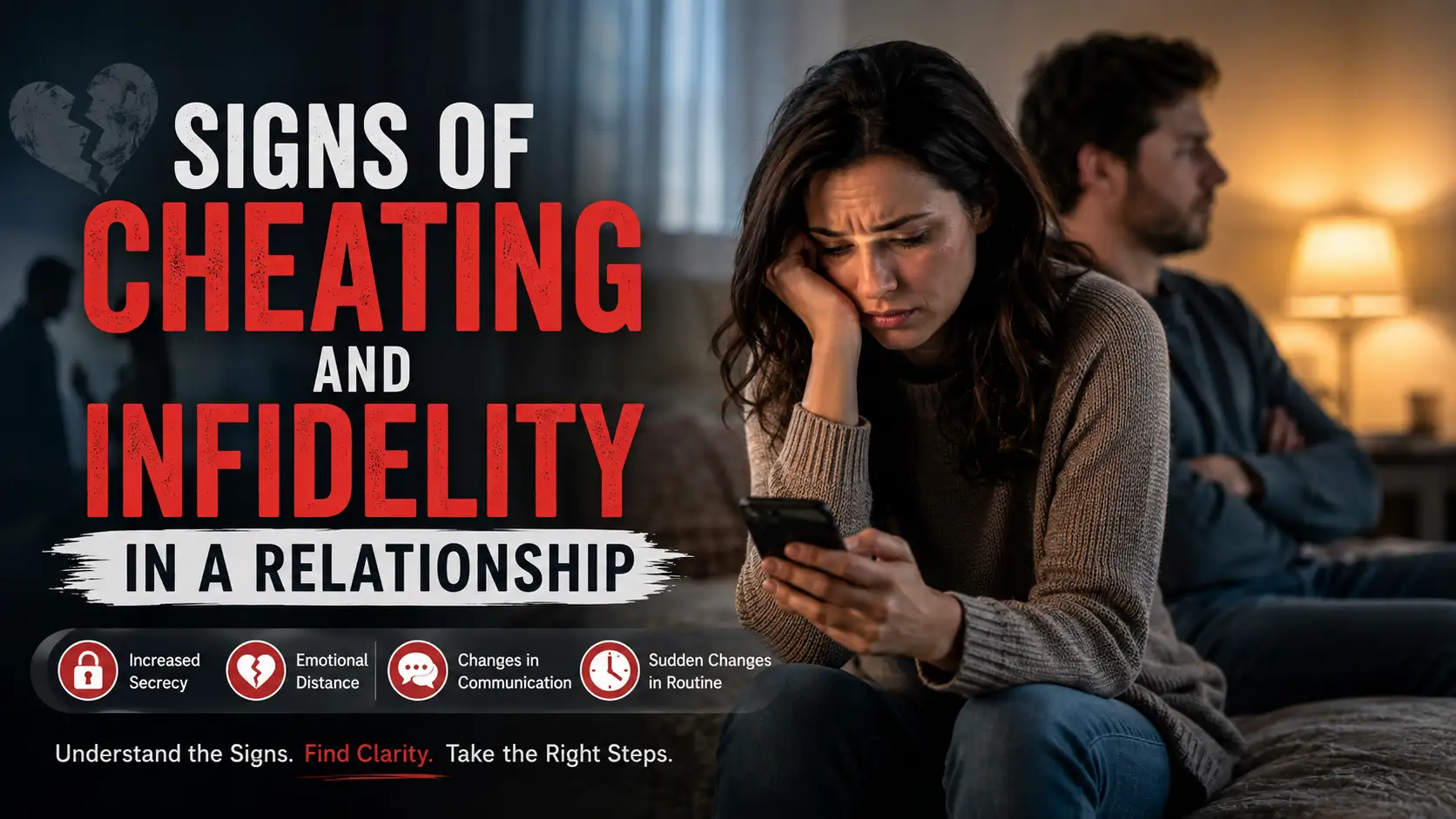
No single sign proves someone is cheating. Instead of focusing on one suspicious incident, look for consistent behavior changes that create a pattern over time. Common indicators include emotional distance, increased secrecy, shifts in communication, and unexpected changes to daily routines. Below, you’ll find practical guidance to help you understand what these signs mean, how to talk to your partner, and what steps to take next whether you’re seeking clarity, healing, or closure.
If you’re searching for signs of cheating or signs of infidelity, it’s likely because something in your relationship feels off. While every partnership is different, there are recognizable patterns that often appear when a partner is involved in a physical affair or an emotional affair.
Behavioral Changes
One of the earliest indicators of cheating in a relationship is a noticeable shift in behavior. You may observe:
- Less communication: Conversations that once flowed easily now feel forced or one-sided. Your partner may share fewer details about their day or seem uninterested in yours.
- Easily irritated: Small things that never bothered them before now trigger defensiveness, anger, or withdrawal.
- Less affection: Physical touch, compliments, and loving gestures may decrease without explanation.
- Avoiding quality time: They might start making excuses to skip date nights, family events, or even simple evenings at home together.
These changes in communication and emotional availability often signal that something deeper is happening beneath the surface.
Increased Secrecy
Secrecy is one of the most common partner cheating signs. While everyone deserves privacy, a sudden obsession with guarding devices and accounts can be a red flag.
You may notice:
- Password changes: They change phone or computer passwords and no longer share them with you, even if you previously had open access.
- Phone always hidden: Their phone is never left unattended—face down, on silent, or taken to the bathroom.
- Deletes messages: You notice they regularly clear call logs, texts, or browser history.
- Private social media activity: New accounts you didn’t know about, excessive messaging, or refusal to connect on social platforms can all point toward hidden interactions.
Emotional Distance
An emotional affair often begins with emotional withdrawal from the primary relationship. Signs include:
- Less intimacy: Both physical and emotional intimacy may decline. They may avoid eye contact, deep conversations, or sexual connection.
- Fewer future plans: Talk about vacations, moving in together, marriage, or long-term goals suddenly stops.
- Lack of emotional connection: When you try to connect, they seem distant, distracted, or emotionally unavailable.
- Feels emotionally unavailable: They no longer turn to you for comfort, support, or celebration, creating a painful gap in your bond.
Changes in Routine
Unexpected shifts in daily habits can also indicate infidelity.
You may notice:
- Working late frequently: Sudden, unexplained overtime or work emergencies that never existed before.
- Unexpected trips: Business travel, weekend outings with “friends,” or plans that don’t include you and lack clear details.
- New hobbies without explanation: They pick up new interests, change their appearance, or visit new places without inviting you or explaining why.
- Sudden schedule changes: Their routine shifts dramatically without a corresponding reason like a new job or project.
Quick Reminder: One sign doesn’t prove infidelity. Look for consistent patterns, not isolated incidents. A single late night at work or a forgotten anniversary doesn’t necessarily mean your partner is cheating. Context matters.
Before jumping to conclusions, it’s important to understand that these behaviors may also happen because of completely unrelated issues:
- Work stress: Heavy workloads, tight deadlines, or job insecurity can cause irritability, withdrawal, and late nights.
- Anxiety: Generalized anxiety or social anxiety can make someone seem distant, secretive, or emotionally unavailable.
- Depression: Depression often reduces libido, communication, and interest in activities once enjoyed.
- Family problems: Issues with parents, siblings, or extended family can consume emotional energy and time.
- Burnout: Physical and mental exhaustion from caregiving, parenting, or career demands can mimic the signs of cheating.
- Personal struggles: Health concerns, financial stress, or identity crises can cause someone to pull away temporarily.
“Suspicion without evidence can damage trust just as much as dishonesty.”
If you notice these behaviors, approach the situation with curiosity rather than accusation. Open a dialogue about their mental health, stress levels, and overall well-being before assuming the worst. In some relationships, emotional manipulation can also create confusion. Learn more about love bombing.
Learning how to confront a cheating partner or even a partner you simply suspect is pulling away is one of the hardest conversations you’ll face. The goal is to create a safe space for honesty, not to corner or attack.
Pick the Right Time
Timing and environment matter enormously.
- Private place: Choose a quiet, comfortable location where you won’t be overheard or interrupted.
- No distractions: Turn off the TV, put phones away, and ensure children or roommates aren’t around.
- Stay calm: Enter the conversation when you’re composed enough to speak clearly and listen actively.
Use “I” Statements
Framing your concerns around your own feelings reduces defensiveness and keeps the conversation productive.
| Example | Avoid |
| “I’ve noticed we’ve grown distant lately, and I’d like to understand what’s happening.” | “You’re definitely cheating.” |
| “I feel disconnected when we don’t talk like we used to.” | “You’re always hiding your phone from me.” |
| “I miss the emotional intimacy we once shared.” | “You don’t love me anymore.” |
“I” statements focus on your experience of trust, betrayal, and emotional safety rather than placing blame.
Listen Before Reacting
Once you’ve shared your feelings, give them space to respond.
- Let them explain: Even if their explanation seems unlikely, hear them out completely.
- Ask questions: Seek clarity without interrogating. “Can you help me understand why your schedule changed?” is more effective than “Who were you with?”
- Avoid interrupting: Let them finish their thoughts before you respond. This builds the transparency necessary for honest communication.
Prepare for Any Answer
Not every conversation ends with a clear confession or denial. Possible outcomes include:
- They deny it: They may genuinely be innocent, or they may not be ready to admit the truth.
- They admit it: This opens the door to deciding whether to work on the relationship or separate.
- They need time: Some people shut down under pressure and need space to process before responding honestly.
- Misunderstanding: What looked like infidelity may actually be explained by stress, friendship, or personal struggles.
Discovering infidelity whether emotional or physical can be devastating. It often leaves you questioning your relationship, your trust, and your future. There isn’t one “right” response. Whether you choose to rebuild the relationship or walk away, your emotional well-being should always come first.
If you’ve decided to end the relationship, our guide on how to break up with someone you love can help.
Recovering from an affair is possible, but it requires genuine commitment from both partners. Trust isn’t restored through promises alonenit is rebuilt through consistent actions over time.
Honest Communication
The partner who cheated must be willing to answer difficult questions honestly. Avoiding conversations or hiding details only delays the healing process.
Transparency
Temporary transparency can help rebuild a sense of security. This may include being open about schedules, communication, and daily routines until trust begins to return.
Consider Couples Therapy
Working with a licensed relationship counselor can help both partners understand what led to the affair and develop healthier communication patterns. Professional guidance often provides practical tools for rebuilding trust.
Set Healthy Boundaries
Agree on clear boundaries moving forward.
Examples include:
- Ending all contact with the other person.
- Being honest about future concerns.
- Respecting each other’s emotional needs.
- Rebuilding trust through consistent actions.
Give Healing Time
Healing after infidelity doesn’t happen overnight. There will be good days and difficult days. Patience, accountability, and genuine remorse are essential if both partners are committed to rebuilding the relationship.
Expert Tip: Research from the Gottman Institute suggests that couples who successfully recover from infidelity often rebuild trust through honest communication, consistent transparency, and a shared commitment to understanding what contributed to the affair.
Ending a relationship after betrayal is also a valid choice. If trust has been broken beyond repair, protecting your emotional and mental health may be the healthiest decision.
Prioritize Your Emotional Health
Allow yourself to grieve. It’s normal to experience sadness, anger, confusion, or disappointment after discovering infidelity.
Build a Support System
Lean on trusted friends, family members, or a therapist. Talking to supportive people can reduce feelings of isolation and help you process your emotions in a healthy way.
Make Practical Plans
If you live together, share finances, or have children, create a realistic plan before making major decisions.
Think about:
- Living arrangements
- Financial responsibilities
- Legal matters, if necessary
- Co-parenting arrangements
Focus on Healing
Recovery takes time. Prioritize self-care by:
- Exercising regularly
- Getting enough sleep
- Spending time with supportive people
- Returning to hobbies and personal goals
- Seeking professional support if needed
Healing isn’t about forgetting the past it’s about creating a healthier future.
Many people ask, “Can a relationship survive cheating?” The honest answer is yes but not every relationship will. Whether a relationship survives depends on several important factors.
- Both partners are committed. Rebuilding trust requires effort from both people.
- The cheating partner accepts responsibility. Blaming circumstances or the betrayed partner makes healing much harder.
- There is genuine remorse. Apologies should be supported by consistent changes in behavior.
- Transparency becomes a priority. Openness replaces secrecy.
- Both people invest in rebuilding trust. Small, consistent actions matter more than grand promises.
- Professional counseling is considered. Couples therapy can provide guidance during recovery.
Choosing to stay isn’t a sign of weakness. Choosing to leave isn’t a sign of failure. The healthiest decision is the one that protects your emotional well-being and aligns with your values.
Although many couples recover after infidelity, certain behaviors can indicate a deeper pattern of unhealthy relationship dynamics.
Watch for these warning signs:
- Repeated lying even after being confronted.
- Gaslighting that makes you question your own memory or reality.
- Blaming you instead of accepting responsibility.
- Refusing accountability or minimizing the affair.
- Multiple affairs that show a repeated pattern of betrayal.
- Emotional manipulation through guilt, threats, or intimidation.
If these behaviors continue, consider speaking with a licensed therapist or counselor. Your emotional safety should always come first.
What is considered a love affair or infidelity?
Infidelity is generally defined as breaking the trust and commitment within a relationship by becoming romantically or sexually involved with someone else. This may include a physical affair, an emotional affair, or both. Every relationship has different boundaries, so honest conversations about expectations are important.
Can a relationship survive cheating?
Yes, some relationships recover after infidelity when both partners are willing to rebuild trust through honesty, accountability, transparency, and consistent effort. For others, ending the relationship may be the healthier choice. There isn’t one answer that fits every situation.
Is emotional cheating the same as physical cheating?
They are different, but both can seriously damage a relationship. Emotional cheating involves developing a deep emotional connection with someone outside the relationship, often leading to secrecy and emotional distance from your partner. Both forms of infidelity can break trust and emotional intimacy.
Should you forgive a cheating partner?
Forgiveness is a personal decision. It depends on the circumstances, your partner’s willingness to accept responsibility, and whether trust can realistically be rebuilt. Forgiving someone doesn’t mean you have to stay in the relationship, it means making the decision that’s healthiest for your own healing.