
What Is Love? A Clear, Honest Answer
Love is one of the most talked-about emotions in the world, yet it’s also one of the hardest to define. You might be asking this question because you’ve started developing feelings for someone, you’re trying to understand your relationship, or you’re simply curious about what love really means.
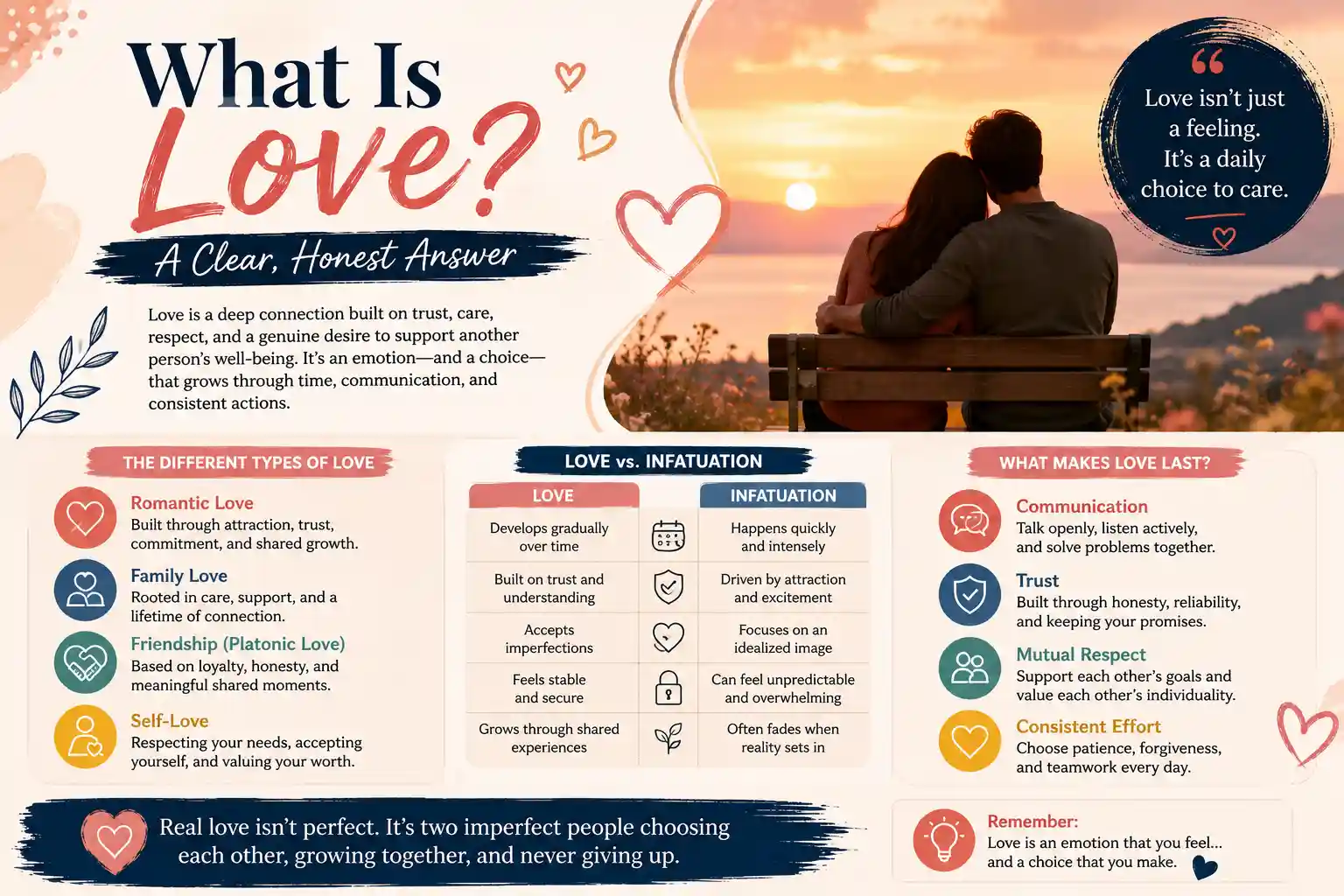
The truth is that love isn’t just a feeling that appears overnight. It’s a deep emotional connection built on trust, care, respect, and a genuine desire to support another person’s well-being. While attraction and excitement often come first, lasting love grows through shared experiences, honest communication, and consistent actions over time.
If you’ve ever wondered what does love mean, what does love feel like, or how love is different from infatuation, this guide will give you clear, practical answers based on relationship psychology not movie myths or unrealistic expectations.
Ask ten different people what love means, and you’ll probably get ten different answers. Some describe it as a powerful emotion, while others see it as loyalty, commitment, or sacrifice. In reality, love is all of these things working together.
At its core, love means genuinely caring about another person’s happiness and well-being. It’s wanting to support them, respect their individuality, and build a relationship where both people feel safe, valued, and understood. Love isn’t about controlling someone or expecting them to make you happy all the time. Instead, it’s about growing together while accepting that both people are imperfect.
This is why healthy love goes far beyond romantic gestures. Saying “I love you” is meaningful, but the way someone treats you every day often says much more. Listening when you’re upset, remembering the little things that matter to you, respecting your boundaries, and being there during difficult moments are all powerful expressions of love.
Many psychologists also describe love as both an emotion and a choice. The initial feelings may happen naturally, but maintaining a healthy relationship requires patience, trust, communication, forgiveness, and mutual effort. That’s what separates lasting love from temporary attraction.
In simple words, love is choosing to care for someone consistently not just when it’s easy, but even when life becomes challenging.
One of the biggest misconceptions is that love should always feel exciting. While the early stages of a relationship often come with butterflies and anticipation, those emotions naturally change over time.
For many people, real love feels less like constant excitement and more like emotional security. It’s knowing there’s someone you can trust, someone who accepts you without pretending to be perfect, and someone who genuinely wants the best for you.
Love often brings feelings of comfort, peace, and belonging. You enjoy spending time together, miss each other when you’re apart, and naturally start imagining a future that includes the other person. At the same time, healthy love doesn’t make you lose your identity. You still have your own goals, friendships, and interests while feeling supported by your partner.
That doesn’t mean love is free from disagreements. Every relationship experiences misunderstandings and difficult days. What makes love different is the willingness to communicate, solve problems together, and keep showing respect even during conflict.
Real love isn’t just about feeling excited when everything is going well. It’s feeling emotionally safe, respected, and cared for even when life isn’t perfect.
Love feels emotional, but it’s also influenced by what’s happening inside your brain. When you start liking someone, your brain releases chemicals that affect your thoughts, emotions, and even your behavior. That’s why falling in love can feel exciting, confusing, and sometimes overwhelming.
One of the first chemicals involved is dopamine, often called the “feel-good” hormone. It creates excitement and makes you want to spend more time with the person you’re attracted to. This is why you may keep thinking about them, smile when they text, or look forward to seeing them again.
As your relationship grows, oxytocin becomes more important. Often known as the “bonding hormone,” it’s released through hugs, physical touch, and emotional closeness. It helps build trust, comfort, and a stronger emotional connection over time.
Another hormone, vasopressin, is linked to long-term attachment and commitment. Together, these brain chemicals explain why the intense excitement of early attraction often develops into a calmer, more secure type of love.
This is completely normal. Healthy love doesn’t disappear when the butterflies fade it simply changes. Over time, many couples replace constant excitement with trust, emotional safety, and a deeper sense of partnership.
Real love isn’t just about chemistry. It’s a combination of emotion, trust, shared experiences, and the daily choice to care for another person.
When people hear the word love, they usually think about romantic relationships. In reality, love exists in several forms, and each one adds something valuable to our lives. Understanding these differences helps you appreciate that love is much broader than dating.
Romantic Love
Romantic love grows through attraction, emotional intimacy, trust, and commitment. While passion often brings two people together, lasting relationships depend on consistent care, respect, and honest communication.
Healthy romantic love isn’t about being perfect. It’s about supporting each other, solving problems together, and continuing to grow as a couple.
Family Love
Family love is built through years of shared experiences, care, and support. Whether it’s between parents and children or siblings, this type of love often provides a strong sense of belonging and security.
Like any relationship, family bonds can face challenges. However, forgiveness, understanding, and mutual respect help keep those connections strong.
Friendship (Platonic Love)
Some of the deepest relationships in life aren’t romantic at all. True friendships are built on trust, loyalty, honesty, and shared memories.
A genuine friend supports your goals, stands by you during difficult times, and accepts you without expecting perfection.
Self-Love
Healthy relationships with others often begin with a healthy relationship with yourself. Self-love means respecting your needs, accepting your imperfections, and treating yourself with the same kindness you would offer someone you care about.
People who practice self-love usually find it easier to build balanced, respectful, and emotionally healthy relationships with others.
Many relationships begin with excitement, but lasting love is built on much more than strong emotions. As the honeymoon phase fades, couples rely on habits that create trust and emotional security.
One of the biggest factors is communication. Partners who talk openly about their feelings, expectations, and problems are more likely to build a healthy relationship. Honest conversations prevent misunderstandings from turning into long-term resentment.
Trust is equally important. Real love grows when both people feel safe, respected, and confident that they can rely on each other. Trust isn’t created through grand gestures it’s built through small, consistent actions over time.
Healthy relationships also need mutual respect. This means accepting each other’s opinions, supporting personal goals, and allowing both partners to grow as individuals instead of trying to control one another.
Finally, lasting love requires effort. Every relationship faces disagreements and stressful moments, but couples who choose patience, forgiveness, and teamwork often develop a stronger emotional bond with time.
Many people confuse love with infatuation, especially at the beginning of a relationship. Both can feel intense, but they’re not the same.
| Love | Infatuation |
| Develops gradually over time | Often happens very quickly |
| Built on trust and understanding | Driven mainly by attraction and excitement |
| Accepts imperfections | Focuses on an idealized image |
| Feels stable and secure | Can feel unpredictable and overwhelming |
| Grows through shared experiences | Often fades when reality sets in |
Infatuation isn’t necessarily a bad thing. In fact, many healthy relationships begin with strong attraction. The difference is that real love continues to grow after the initial excitement fades, while infatuation often depends on fantasy rather than genuine connection.
If you’re unsure what you’re feeling, ask yourself this question:
Do I love this person for who they truly are, or for who I imagine them to be?
The answer often reveals whether your feelings are growing into love or are still based on infatuation.
Understanding what love isn’t is just as important as knowing what it is. Many unhealthy behaviors are mistaken for love, but they usually create emotional pain instead of genuine connection. Love is not control. Someone who truly loves you won’t try to decide who you can talk to, where you can go, or how you should live your life.
Love is not jealousy or possessiveness. Feeling protective is normal, but constant suspicion, monitoring, or manipulation isn’t a sign of healthy love. Love is not a dependency. A strong relationship brings two independent people together. It doesn’t require either person to lose their identity or happiness.
Finally, love isn’t about being happy every single day. Every couple experiences disagreements and difficult moments. What matters is how you treat each other during those challenges.
Not everyone shows love in the same way. Some people express it through words, while others show it through actions, quality time, or physical affection. This is why two people can genuinely care about each other but still misunderstand each other’s intentions.
For example, one partner may regularly say “I love you,” while the other prefers to show love by helping with everyday tasks or simply spending time together. Neither approach is better they’re just different ways of expressing the same emotion.
Learning how your partner naturally gives and receives love can improve communication and reduce misunderstandings. Instead of assuming they don’t care, try to notice the small ways they show affection every day.
If you’d like to understand these differences better, read our guide on Love Languages, where we explain the five common ways people express and receive love.
What is love in simple words?
Love is a deep emotional connection built on care, trust, respect, and commitment. It’s more than a feeling it’s also the consistent choice to support someone’s well-being.
What does love feel like?
Healthy love often feels safe, peaceful, and comforting. While excitement is common in the beginning, lasting love is usually built on trust, emotional security, and mutual respect.
What’s the difference between love and infatuation?
Infatuation is driven mainly by excitement and attraction, while love grows through trust, understanding, and shared experiences. Infatuation may fade quickly, but real love becomes stronger over time.
Can you love someone without being in a relationship?
Yes. Love doesn’t always require a romantic relationship. You can deeply care about someone even if you never date them or choose not to be together.
Does love change over time?
Yes. In many healthy relationships, passionate excitement gradually develops into deeper trust, emotional intimacy, and long-term commitment. This change is a normal part of lasting love.
Can love be different for everyone?
Absolutely. People experience and express love differently based on their personality, life experiences, values, and relationships. While the feeling is universal, the way it’s shown isn’t the same for everyone.
So, what is love? There’s no single sentence that can fully define it because love is experienced differently by every person. But one thing remains true across healthy relationships: love is built on trust, respect, emotional connection, and consistent care not just intense feelings or romantic words.
Whether you’re trying to understand your own emotions, strengthen a relationship, or simply learn what love really means, remember that lasting love isn’t about perfection. It’s about showing up for each other, communicating honestly, and choosing kindness even when life becomes difficult.
The excitement of new attraction may come and go, but genuine love grows stronger through shared experiences, patience, and everyday actions. In the end, real love isn’t just something you feel, it’s something you choose to build every single day.